
How much of the dress is each piece?
Build 443 changed fabric and colour percentages: small components such as collars and sleeves now receive extra weight. The size of a skirt panel alone no longer predicts its contribution to those requirements.
A dress passed before the update but falls short now
| Check | What to do now |
|---|---|
| Fabric type or colour percentage | Read the current in-game value. Check the bodice, collar and sleeves as well as the skirt; smaller parts now contribute more than raw area alone suggests. |
| A style such as Elaborate or Eclectic | Check the style line separately. The update says style tags already used weighted parts; do not treat a style score as a material percentage. |
| Lace fabric versus Lace Trim | Cloth composition and accessory length remain different tasks. Extra trim is not a substitute for the required fabric. |
Enter the numbers shown in the game into the finished-dress checker. The designer currently leaves fabric and colour checks unverified while the Build 443 calculation is being checked. Avoid buying a replacement skirt solely because an old raw-area example says it will pass.
Read the current value and the target separately
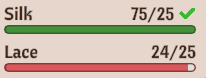
The screenshot is not a Build 443 formula demonstration. The old build rounded displayed composition values down; the new small-part weighting can change the underlying values themselves. Check each target tick instead of adding visible whole numbers and assuming a pass.
Historical Build 410 area calculator and examples
These figures explain the old raw-area model. They are useful for comparing panel sizes, not for certifying a Build 443 commission.
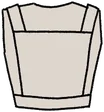
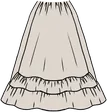
Tick the pieces you will cut from one fabric.
| Piece | Share of the dress | Share of tag scores |
|---|---|---|
| 4.3% | 17% | |
| 3.9% | 15% | |
| 0.4% | 1.5% | |
| 0.6% | 2.1% | |
| 1.6% | 6.2% | |
| 0.7% | 2.8% | |
| 0.7% | 2.8% | |
| 12% | 7.6% | |
| 12% | 7.2% | |
| 15% | 9.0% | |
| 15% | 9.0% | |
| 9.1% | 5.5% | |
| 8.9% | 5.4% | |
| 13% | 7.6% | |
| 3.2% | 1.9% |
Lace on the bodice and sleeves, but still short?
The pattern changes the amount of dress area each material covers. These two examples use the same Cinched Keyhole Blouse and Long Sleeve, no collar, and the first version of each pattern. Only the skirt changes.
 Absynthe Lace on the bodice and sleeves;
 Aged Copper Silk on the skirt.
Those fabrics unlock at shop rank 14 and 21, respectively. Check the fabric finder for materials you can buy; the designer flags locked choices.
| Skirt pattern | Lace area | Silk area | Lace fabric weight in tag scores | Inspect this example |
|---|---|---|---|---|
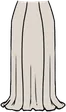 Bias Cut Skirt | 24.3% | 75.7% | 55.6% | Load Bias Cut Skirt area example |
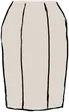 Pencil Skirt | 45.8% | 54.2% | 55.6% | Load Pencil Skirt area example |
The Bias Cut example falls short of the Lace 25% line on Fainting Dress. The Pencil example clears that one line, including the higher Lace 40% line on Parental Guidance. Quality, other tags and decoration requirements still need their own checks; these are not complete commission solutions.
These are fixed-panel planning estimates, with all pieces cut and placed. Your in-game readout is the check after making the dress. If you use several fabrics within one part or leave a piece uncut, the one-fabric-per-part example no longer describes that dress. The fabric weight in the tag calculation stays the same here; the patterns’ own tags can still change the total score.
Using several prints on one skirt? The tier-by-tier cutting map separates the skirt tiers from its waist pieces and shows why equal panel counts do not mean equal fabric area.
Rules that count area
Share rules on a card, such as a fabric (Velvet: at least 50%) or a colour (Black: at least 50%), measure each cut piece’s area against the whole dress. On a typical pairing the skirt is about 88% of the bodice-and-skirt area, and a peplum or a waistband is only a percent or two. That is why a sequin goal met with trim pieces takes far more fabric than it looks: put the fabric on one skirt panel instead. A fabric in several colours splits its area between them, so a two-colour print counts half toward each. 21 cards on the commission finder have a share rule like this.
Tag scores count parts, not area
| Part | Share of a fabric’s tag scores |
|---|---|
| Bodice | 35% |
| Skirt | 40% |
| Sleeves | 15% |
| Collar | 10% |
Leave out the collar or the sleeves and their share goes to the other parts. Inside a part, each piece counts by its area within that part. So a strong fabric on the bodice alone moves a tag by about a third of that fabric’s score, for a small piece of cloth; the skirt moves it a little more but costs many times the metres. The patterns you pick add their own tag values on top, and accessories add theirs after that. How the accessories stack is on a tag that will not go up, and the fabric with the most of a tag is in the fabric finder.
Using it on a card
- Short on a tag: recut the bodice in a fabric strong in that tag before you touch the skirt.
- Short on a share rule: read the current game percentage and consider all parts. Build 443 boosts small components; the old skirt-first shortcut can mislead.
- Check before you cut: the sketchbook shows the tag totals as you add swatches, and the pass-or-fail checker reads a finished dress against its card.